If you’re someone like me who has a low tolerance for both pain and commitment, then henna tattoos (which stain the skin with a plant and last for a few weeks) might be the happy medium for you in between a permanent tattoo and a slap on temporary one. In pre-covid times, I enjoyed getting henna tattoos at county fairs; I also frequented the henna stands in Balboa Park when I lived in San Diego. During pandemic times, I’ve gotten into many DIY crafts, and playing with henna has been one of them.

Before getting into my initial adventures with henna tattoo design, I would like to acknowledge traditional uses of henna, particularly Mehndi the tradition of using henna for elaborate decoration at South Asian weddings. Henna can also be used as a hair dye but it has a permanent effect on your roots so be sure of your decision before using it for hair (as someone who likes to keep my options open, I prefer semi-permanent dye like Overtone).
I’ll be the first to admit that I am a total Indiaphile–the food, the traditions (I’ve long celebrated Holi and Diwali), the colorful makeup and attire. I love all things Indian but make every effort to be cognizant and stay on the side of appreciation instead of appropriation. In so doing, I want to acknowledge that although I enjoy working in henna as a medium because I am not of Indian decent I realize that if I simply wore henna without knowing anything about India or Indian culture it would be a disrespect to the beauty of henna and its usage. I have had the great pleasure of being invited into predominantly Indian spaces by Indian friends and partners many times over the years, including traveling to Bangalore and New Delhi in south and north India, respectively. My first ever henna tattoo was at the encouragement of my friend of Indian decent at a favorite dosa spot in Boston. Anna Akana has a great video on racism and cultural appropriation and although I am always open to learning more and doing better, I have tried in this post to appreciate henna in context and not just extract this tradition for my own benefit.
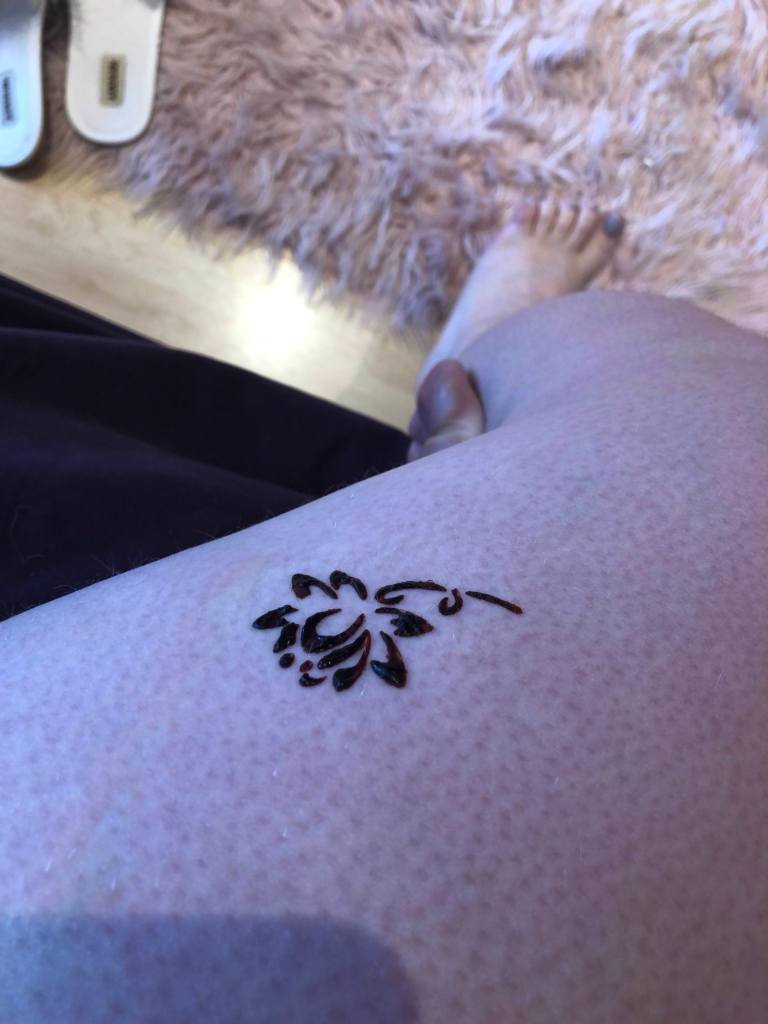
My first home done henna tattoo was the lovely lotus flower on my leg pictured above and below. To create this look, I used a stencil and henna tube that I purchased on Amazon. Below is the encrusted henna while it is drying and above is the final look after that encrusted henna has peeled off. Henna works by dying the skin. First you apply a thick coating of henna and leave it on for 15-30 min to stain the skin. Then that thick coating comes off. The stain below will start out more lightly colored but will oxidize overtime to a darker final reddish brown color.
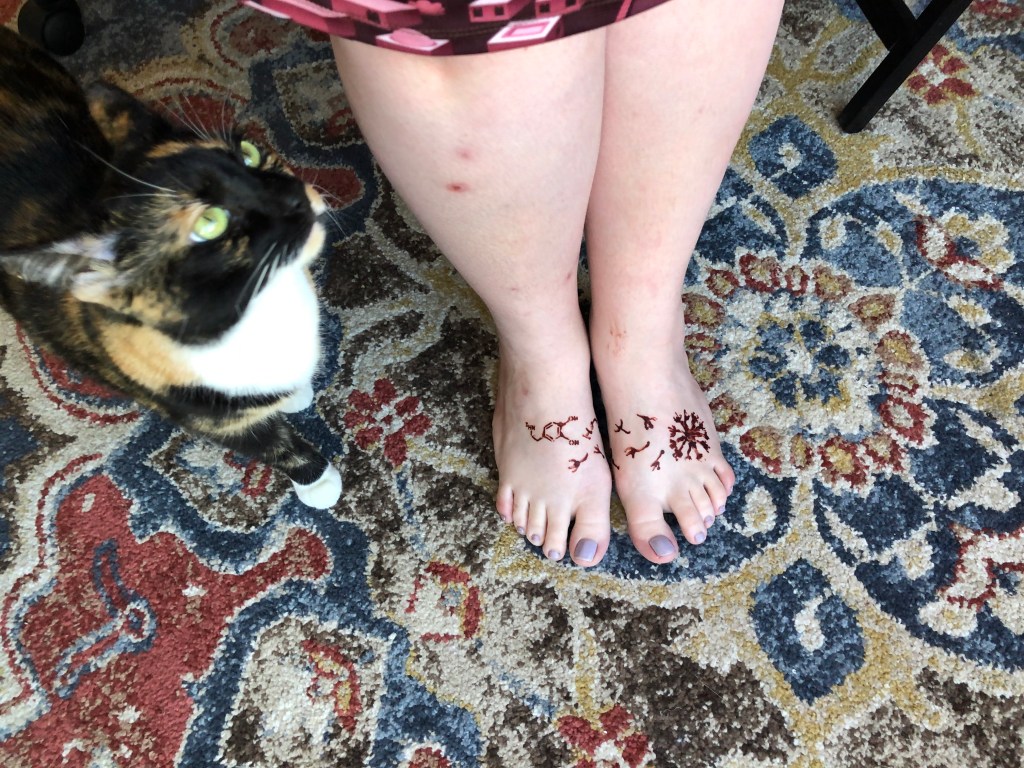
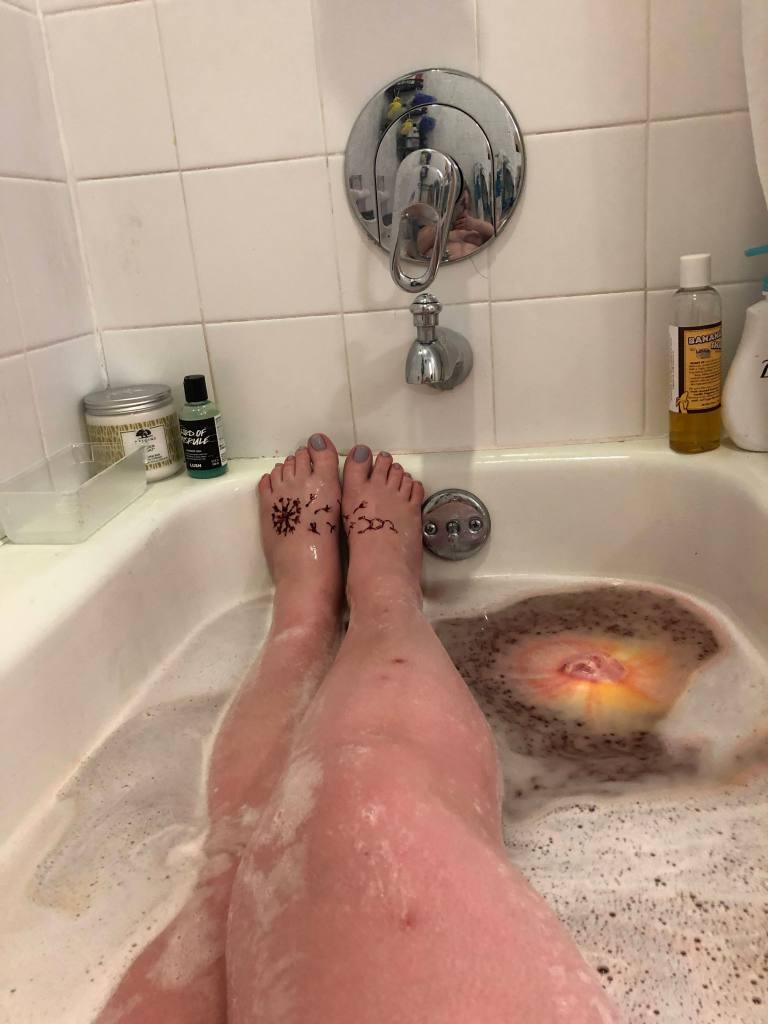
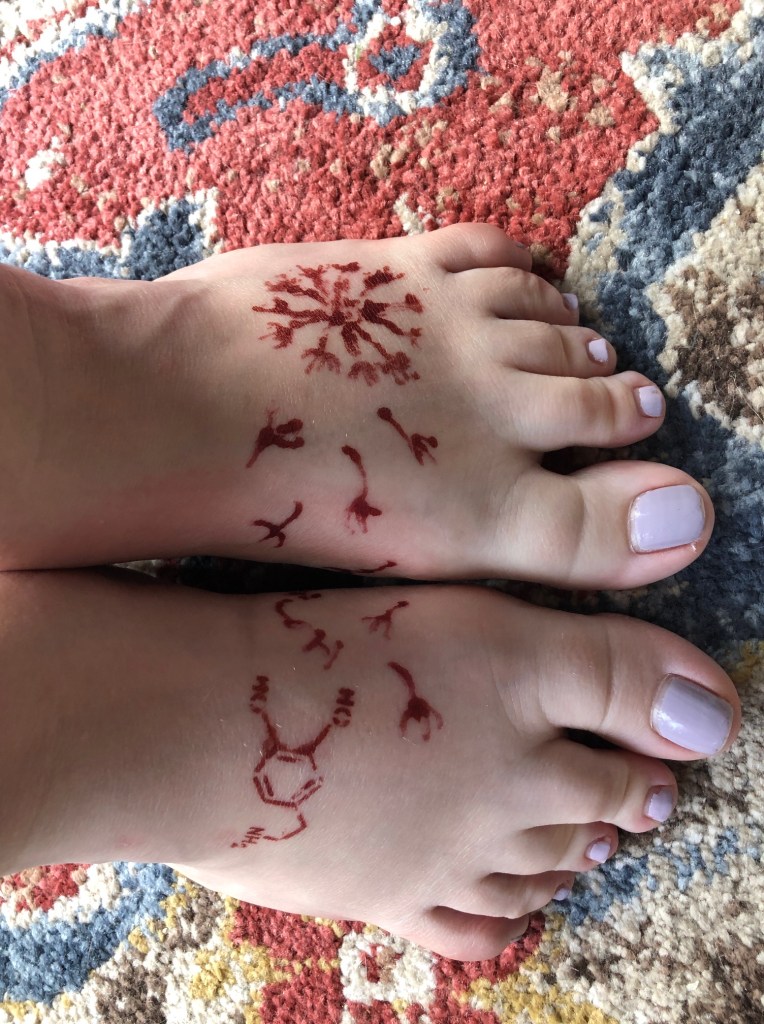
Next I decided to do a fun design on my feet. This design features a dandelion losing it’s petals and becoming a dopamine molecule. My intention with this piece was to emphasize the ephemeral nature of joy and how beautiful things are often fleeting but we enjoy them nonetheless. Also, as a chemist it’s always fun to throw in some organic chemistry to my designs.

 Millennial's Delight